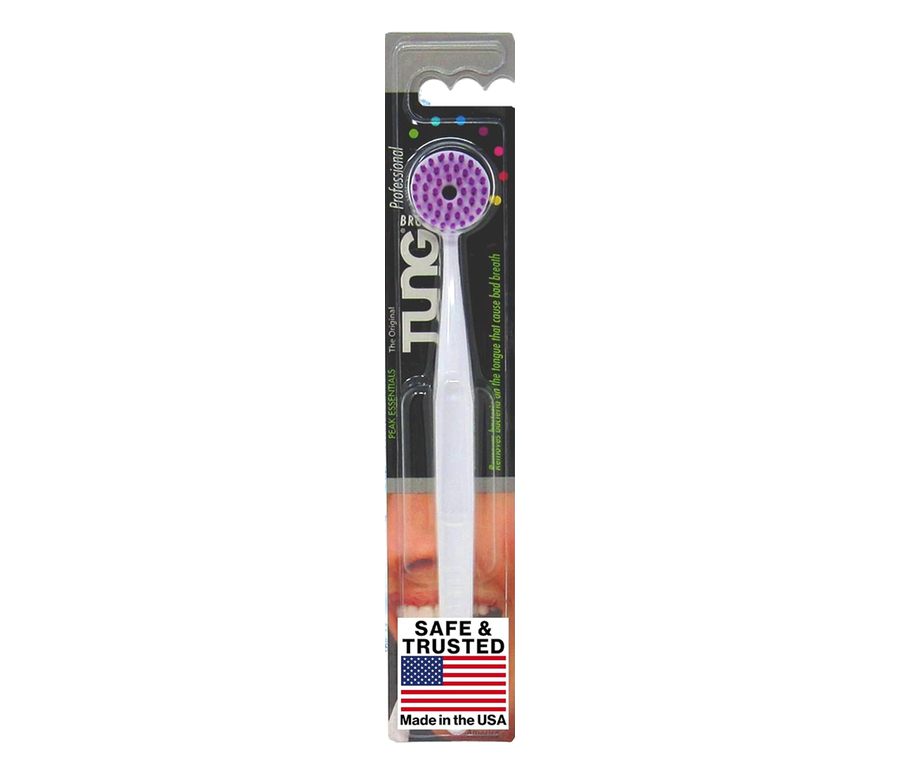
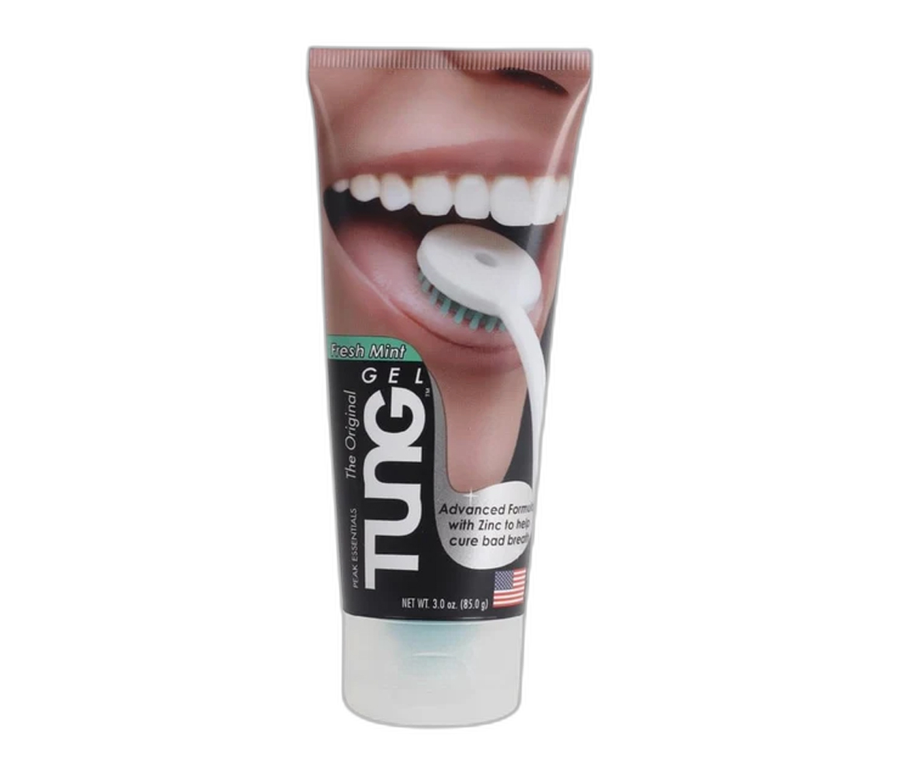
Up to 90% of bad breath doesn't come from your teeth. The most common source is the coating on your tongue, and a toothbrush isn't designed to clear it. TUNG was designed by a dentist to do exactly that, without the gag.

Its surface isn't smooth - it's a landscape of tiny crevices where food debris, dead cells and odour-producing bacteria settle into a coating. That coating is the single most common source of bad breath.
of adolescents and adults worldwide are estimated to have halitosis. It's not rare - it's roughly one in three people.
Silva et al., Clinical Oral Investigations, 2018 (95% CI 24.6-39.0%)of bad breath originates inside the mouth rather than the stomach or sinuses - most often on the tongue.
Frontiers in Oral Health, 2023 narrative reviewof halitosis cases in one clinical study traced directly back to tongue coating - the most common cause in that study.
Frontiers in Oral Health, 2023 narrative reviewA scraper skims the top. Because the tongue's surface is textured, the bacteria sit below the surface, in the crevices. TUNG's short, firm bristles were shaped to get into them - and its low profile lets you reach the back of the tongue, where the odour is strongest, without triggering your gag reflex.
You already do two thirds of the job. TUNG is the 20 seconds that finishes it.
Cleans the surfaces of your teeth.
Cleans between them, but not where most odour starts.
The surface most people have never cleaned. This is where TUNG works.
The brush lifts the coating. The gel neutralises what causes the smell. Used together, they're a 20-second addition to a routine you already have.
Four quick questions to see whether tongue coating could be part of the picture.
Educational only - not a medical diagnosis. Persistent bad breath should be checked by your dentist.
Your patients are already asking about bad breath - usually in an embarrassed whisper at the end of an appointment. TUNG gives you a credible, dentist-designed answer, and the gel is a genuine repeat purchase.

Prefer to talk? 1300 00 8466.
